The first vineyards of Bordeaux were born south of the city, in the Graves region. Their development, initiated in the Middle Ages under the impetus of religious communities, continued thanks to trade with England and Northern Europe. It is in this context that the long history of Château Carbonnieux takes place, closely linked to that of Bordeaux.
The History
A long story…
1234 - 1519
The Origins of the Name
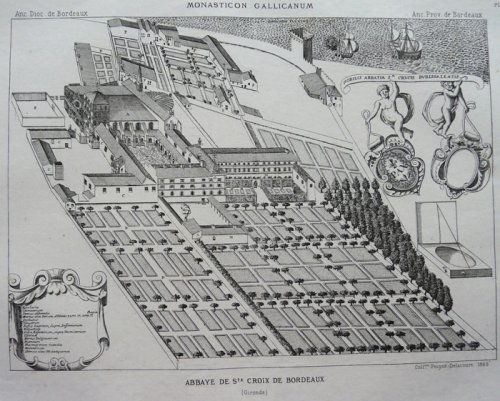
The name Carbonnieux is said to come from a “Carbonius” or Carbonnieu family, who cleared and cultivated land located in Léognan at the beginning of the 13th century. The archives of Bordeaux mention a certain Ramon (or Raimond) Carbonnieu, sub-prior of the Sainte-Croix Abbey, owner of vineyards in Léognan in 1234. This medieval origin of the estate is confirmed by a deed of exchange dated April 2, 1292, between two monks of the powerful Sainte-Croix Abbey of Bordeaux.
The Monks Prosper and Then Abandon
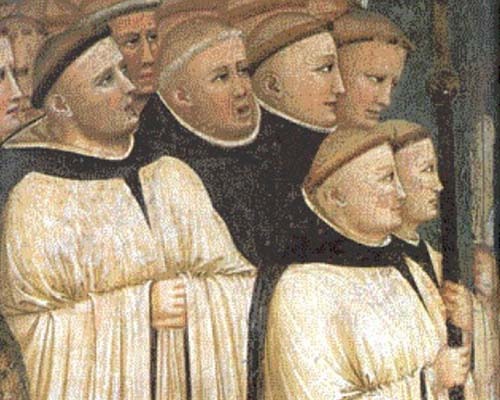
In 1152, Eleanor of Aquitaine married Henry II; Aquitaine entered the Kingdom of England and became Guyenne. Trade was facilitated, wine sales increased, and Bordeaux prospered until the Hundred Years’ War (1337–1453). The owning monks built the foundations of the fortified farm that would later become Château Carbonnieux, but following this long troubled period, which caused famines, poor harvests, and epidemics, the Benedictines were forced to abandon their Carbonnieux vineyard.
1519 - 1740
The Ferron Dynasty
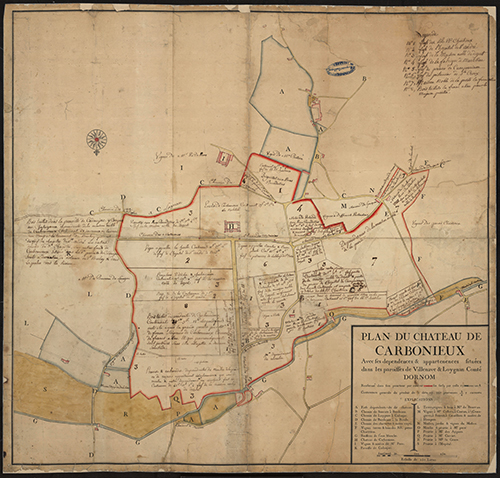
In 1519, following the hardships of the Hundred Years’ War, the land of Carbonnieux was sold by the Benedictines of Sainte-Croix to Jean de Ferron. Coming from a powerful bourgeois family of Bordeaux that already owned vineyards, Jean de Ferron, recently ennobled, needed, to enhance his status, to own a large vineyard in the Graves region. He undertook a policy of acquisitions and land consolidation that continued under his successors for two and a half centuries.
The Final Stone of the Edifice
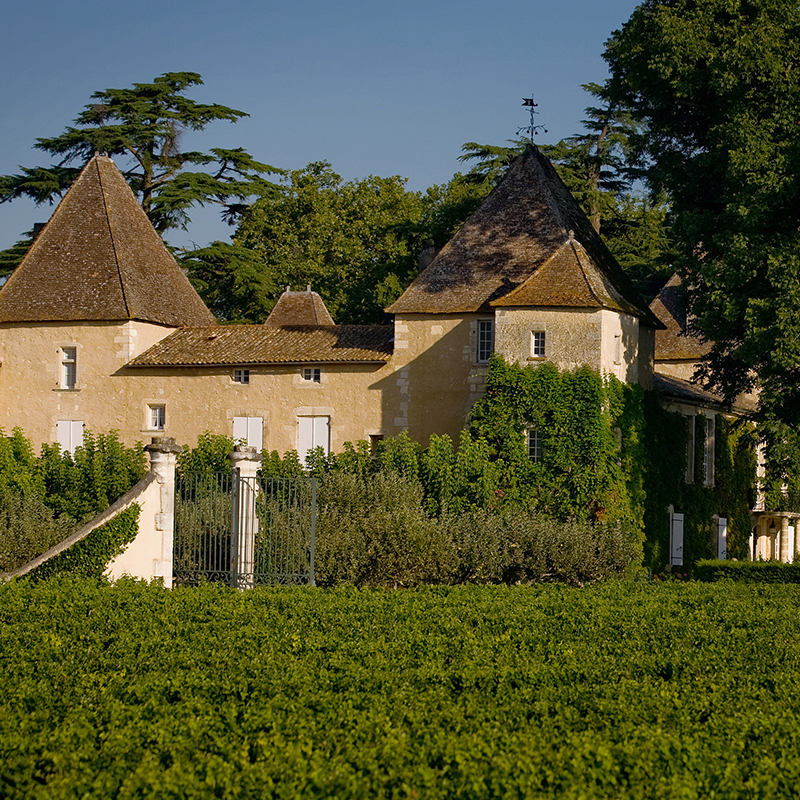
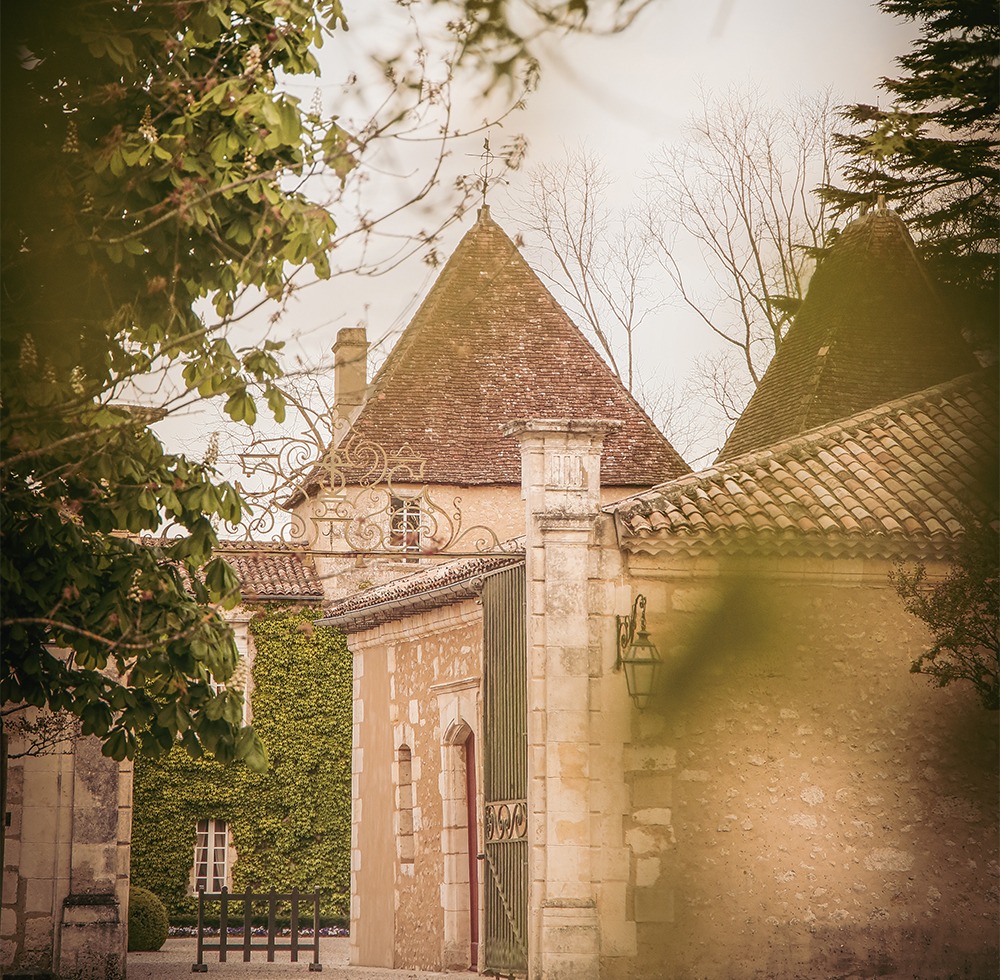
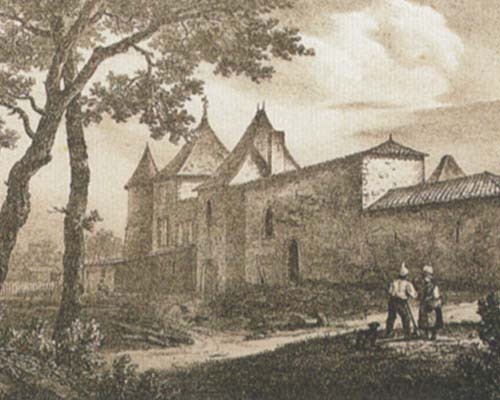
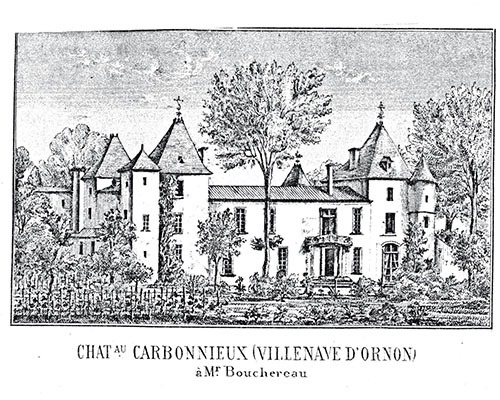
The former fortified farm in Périgord style became the noble residence of the Ferron family. Despite the damage it suffered during the revolts against the salt tax and the renovations that followed, the building retained its current appearance, centered around its magnificent inner courtyard and its tall square towers in Périgord style. The Ferrons turned it into a great estate, with its outbuildings, cultivated lands, and imposing vineyard. Under the reign of Louis XIV, after several generations of Ferron, Carbonnieux reached its first peak.
The End of the Ferrons
Although elevated to the title of “Lords of Carbonnieux,” the Ferron family, burdened by debt over time, sold their Carbonnieux property in 1740 to the monks of the Sainte-Croix Abbey of Bordeaux. After two and a half centuries in the hands of the Ferrons, the estate returned to ecclesiastical ownership, and a new era began for Carbonnieux.
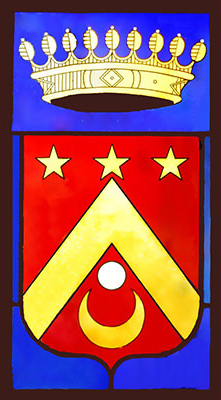
1740 - 1791
The Return of the Monks of Sainte-Croix
Initially acquired to serve as a “nurturing mother” for the abbey, the Benedictines rediscovered its potential and made the Carbonnieux estate their major endeavor to elevate its wines to the top rank of Graves crus. A great winemaker, Dom Galéas, in charge of the estate, was among the first to blend grape varieties and to bottle both white and red wines. His winemaking methods and cellar facilities were among the most modern in the region.
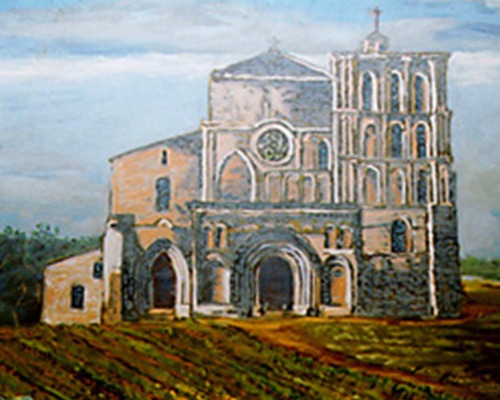
First Classification
In the classification of the Intendance of Guyenne issued in 1776, the white wines “of the Benedictines of Carbonnieux” were highly prized. While the “premier cru de Pontac” (Haut-Brion) was at that time the reference for red wines, Carbonnieux, thanks to the monks of Sainte-Croix, ranked far ahead of all white wines of Guyenne.
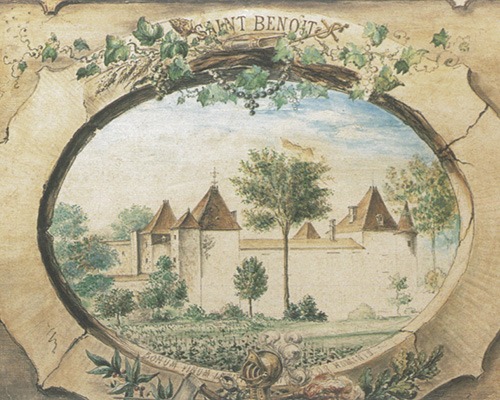
The Monks as Great Exporters
Thanks to the talents of the Benedictines of Sainte-Croix Abbey and their dynamism over half a century, the estate made tremendous progress. Bottling allowed the wines to travel more easily and to be preserved for several years before consumption. The reputation of the famous bottle adorned with the scallop shell became worldwide, from Constantinople to the young United States of America.
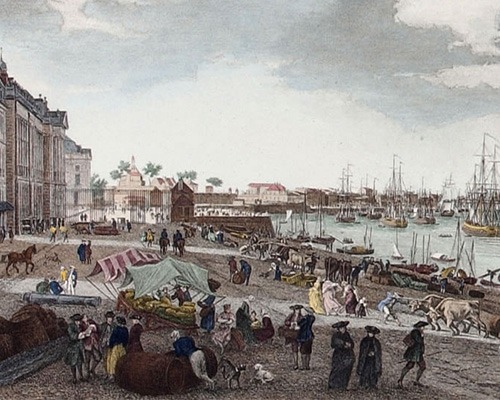
The Birth of a Legend
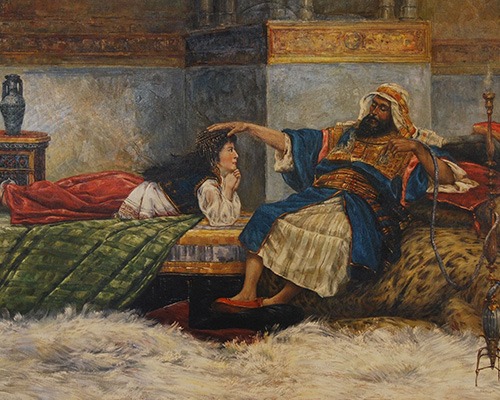
Indeed, in the 18th century, when the port of Bordeaux was flourishing, the monks managed to introduce the clear, lightly colored white wines of Carbonnieux into the palace of the Ottoman Sultan under the name “Carbonnieux mineral water.” The ruse was simple, as one of his favorites was a woman from Bordeaux, captured by pirates and then offered to the prince of the harem. Legend also has it that he asked, “Why do these French make wine when they have such delicious mineral water?”
1787
The Visit of Thomas Jefferson
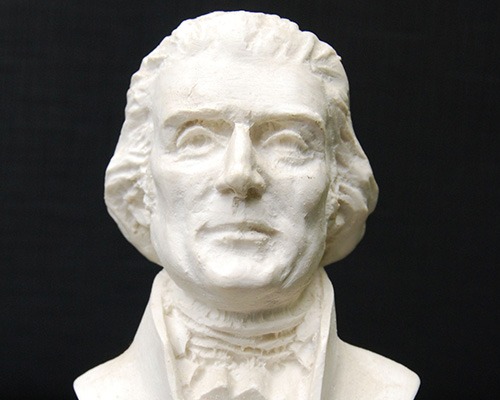
In 1787, Thomas Jefferson, ambassador of the United States to France and future third President of the United States, a gastronome and great wine lover, undertook a grand tour throughout France to discover its vineyards. In Bordeaux, he selected a few renowned estates, and his travel journal reveals that he personally visited Carbonnieux to taste this “Wine of the Odalisques,” as it was called at the time across the Atlantic.
Jefferson’s Pecan Tree
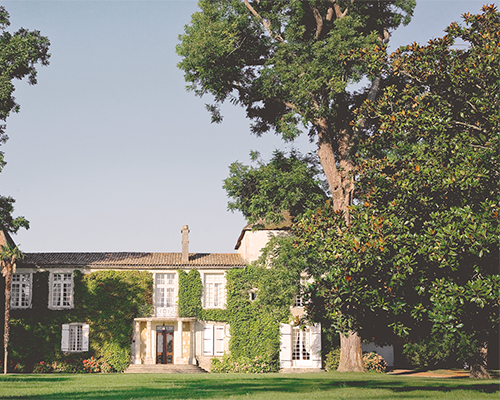
Thomas Jefferson, passionate about botany, also left his mark by planting a pecan tree in the château park. It is one of the emblematic trees of Virginia, Jefferson’s home state. This tree, standing for more than two centuries, once majestically overlooked the inner courtyard. Sadly, in 2022, a storm damaged it by breaking its largest branches. It is nevertheless considered the oldest pecan tree on European soil. Fortunately, the château’s squirrels help replant them throughout the grounds, some already a hundred years old.
1791 - 1878
The Bouchereau Era
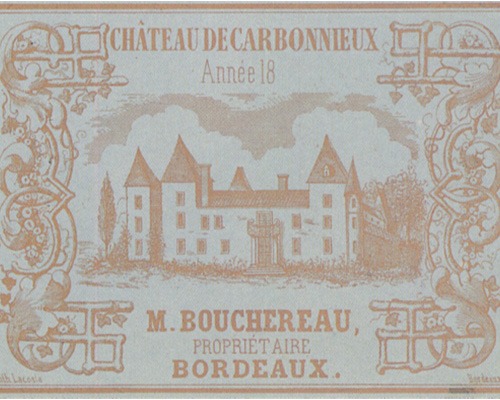
During the French Revolution (1789), the state seized church property. In January 1791, after intense bidding, Carbonnieux was sold as a “national asset” to Elie de Bouchereau. Returning from the West Indies, the Bouchereau family settled at Château Carbonnieux, where they remained for 87 years. Before the phylloxera outbreak in 1871, the estate covered 137 hectares, half of which were planted with noble Bordeaux grape varieties, carefully selected thanks to the ampelographic research of the Bouchereau brothers.
A Unique Collection
From 1828 to 1871, Henry-Xavier Bouchereau assembled at Carbonnieux a unique collection of French and European grape varieties, totaling up to 1,242 different specimens. The dynamism of the Bouchereau brothers also led them to experiment with other crops such as cotton and maple. Their curiosity made Carbonnieux a model estate that attracted many visitors, including notable figures such as Marie-Thérèse of Bourbon, daughter of Louis XVI.
1878 - 1956
The “Waltz” of Owners
In 1878, like many owners during the “disease crisis,” the Bouchereau family had to sell the estate. François Allendy, from Saint-Malo, acquired it but died seven years later. His daughter, the heir, resold the estate to a trio from Charente: Messrs. Martin, Mure, and Ballet. After World War I and discouraged by his partners, Dr. Martin sold Château Carbonnieux in 1920 to the trading company Doutreloux & Co., which faced both an economic crisis and another war and was forced to part with the estate, selling it to Mr. Chabrat, a Bordeaux industrialist in the footwear sector.

1956 to the present
Arrival of the Perrin Family
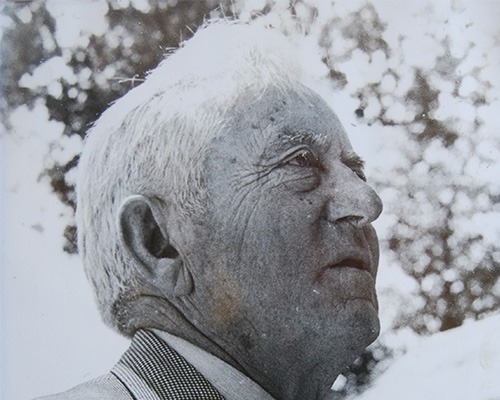
Bordeaux viticulture was at a low point, with many economic difficulties making wine hard to sell. Mr. Chabrat eventually sold the estate to the Perrin family in 1956. That winter was marked by a severe frost, yet from the moment of acquisition, Marc Perrin set about restoring the château and its vineyard. First, he launched a major replanting campaign, expanding the estate from 45 hectares in 1970 to 70 hectares in 1980, and to 100 hectares today.
Antony Perrin
Upon his father’s death, his son Antony took over, built a new vat room in 1990, and modernized the cellars to adapt them to new winemaking methods. He continued the restoration of the château and vineyard and also actively promoted the reputation of Carbonnieux and Bordeaux wines worldwide. He served as president of the Union des Grands Crus de Bordeaux, president of the Crus Classés de Graves, and was one of the promoters of the Pessac-Léognan appellation, created in 1987.
Eric, Christine, Philibert
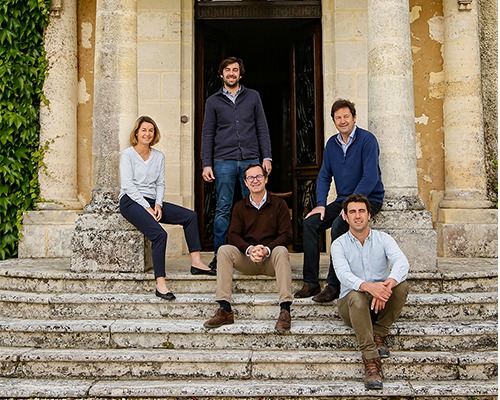
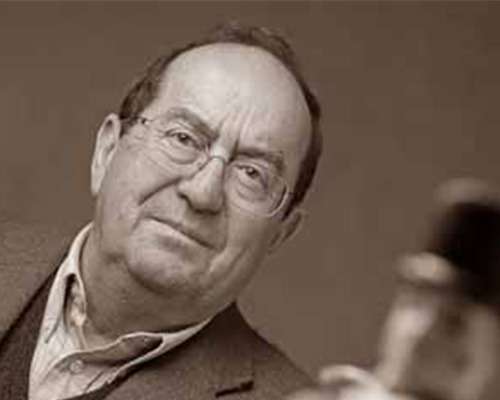
Over the years, Antony Perrin passed on this family heritage and know-how to his children, Eric, Christine, and Philibert. Today, they have taken up the torch of this estate, which has remained for nearly eight centuries one of the jewels of Bordeaux viticulture. Following in his father’s footsteps, Eric served as president of the Crus Classés de Graves from 2012 to 2015, and Philibert as president of the Pessac-Léognan appellation from 2017 to 2021. In 2019, the family grew as Eric’s eldest sons joined the team: Marc on the commercial side and Andréa as oenologist and cellar master.